
The January 2026 Dental Bytes newsletter highlights infection control best practices, ADA dental economy updates, HIPAA enforcement actions, and seasonal preparedness tips for dental professionals.
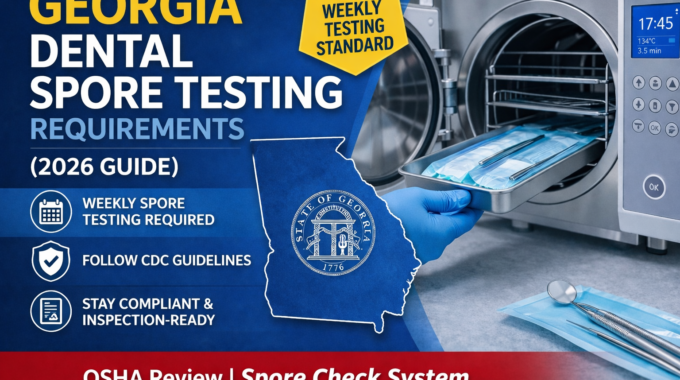
Georgia Dental Spore Testing Requirements (2026 Guide for Compliance)
Georgia Dental Spore Testing Requirements (2026 Guide for Compliance)
Dental offices in Georgia must follow strict infection control protocols to protect patients and maintain compliance. One of the most important parts of a sterilization monitoring program is biological monitoring, commonly called spore testing, which helps verify that sterilizers are functioning properly.
This guide explains what Georgia dental practices should know about spore testing, how often biological monitoring should be performed, and how to stay inspection-ready in 2026.
Looking for a simple way to stay compliant? OSHA Review’s Spore Check System helps dental offices maintain reliable weekly monitoring with fast results and easy recordkeeping.
Are Dental Offices in Georgia Required to Perform Spore Testing?
Georgia dental offices are expected to follow accepted infection control practices. In practical terms, that means using biological monitoring as part of a proper sterilization program. CDC guidance identifies weekly biological monitoring as the standard approach for heat sterilizers in dental settings.
For many practices, that means:
- Spore testing at least weekly
- Testing a new sterilizer before routine use
- Testing again after repairs, relocation, or malfunction
- Maintaining records of test results for compliance documentation
How Often Should Spore Testing Be Done in Georgia?
The safest compliance standard for Georgia dental offices is to perform spore testing at least once every 7 days for each sterilizer in routine use.
Additional testing should also be performed:
- After installation of a new sterilizer
- After a sterilizer repair
- After any sterilization failure or questionable result
- When confirming proper performance before putting instruments back into routine circulation
Why Spore Testing Matters
Spore testing is important because it is the most reliable way to verify sterilization effectiveness.
- Mechanical indicators show cycle conditions such as time, temperature, and pressure
- Chemical indicators show that instruments were exposed to the process
- Biological indicators verify whether resistant spores were destroyed
That is why weekly biological monitoring remains the standard of care in dental sterilization programs.
What Should Georgia Dental Offices Document?
Your sterilization monitoring records should include:
- Date of the spore test
- Sterilizer identification
- Test result
- Load or cycle information, if applicable
- Any corrective action taken after a failed or questionable test
Keeping complete records helps support compliance during inspections and gives your office a clear paper trail if a sterilization issue ever needs to be investigated.
How Georgia Compares to Other States
State requirements are not always written the same way, which is why comparing them side by side is helpful. For a broader overview, see our full state-by-state guide:
Dental Sterilizer Monitoring Requirements by State (2026 Guide)
You can also compare Georgia to these state-specific posts:
- California Dental Spore Testing Requirements (2026)
- Texas Dental Spore Testing Requirements (2026)
- Florida Dental Spore Testing Requirements (2026)
- Ohio Dental Sterilizer Monitoring Requirements (2026)
- New York Dental Spore Testing Requirements (2026)
Helpful Related Resources
Simplify Compliance with OSHA Review’s Spore Check System
The Spore Check System is designed to help dental offices stay organized and inspection-ready with:
- Convenient mail-in biological monitoring
- Reliable reporting
- Easy compliance documentation
- Support for maintaining a consistent weekly testing routine
Learn more about OSHA Review’s Spore Check System.
Key Takeaways
- Georgia dental offices should maintain a proper biological monitoring program for sterilizers.
- Weekly spore testing is the safest standard for compliance and patient protection.
- Additional testing should be performed after repairs, failures, or installation of a new sterilizer.
- Good recordkeeping is essential for inspection readiness.
External References

Related Posts