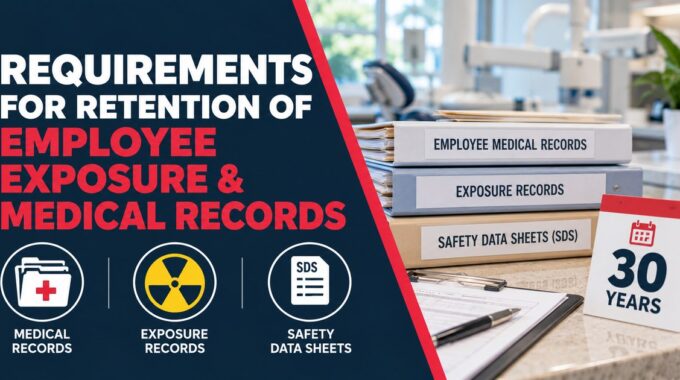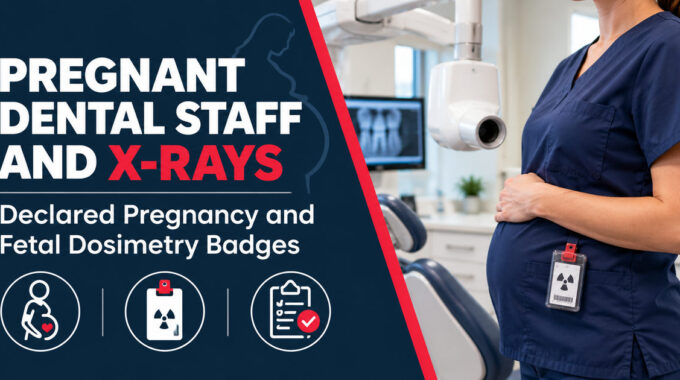
Do you know how long your dental practice must keep employee medical and exposure records?…
Dental Bytes – May 2026 | Patient Dental Record Retention & Compliance
Dental Bytes – May 2026
Understanding dental record retention requirements is essential for every dental practice. Properly maintaining patient records supports continuity of care, ensures compliance with HIPAA and OSHA considerations, and helps protect the practice in the event of a liability claim.
Dental records are more than routine paperwork. They document patient care, support continuity of treatment, and may serve as an important risk management tool if questions arise years after treatment is completed.
This post is part of our Dental Bytes eNewsletter 2026 hub, where you can access each monthly issue.
In This Issue
Featured Topic: Patient Dental Record Retention
Patient dental records typically include clinical notes, radiographs, treatment plans, consent forms, medical histories, periodontal charting, and other documentation related to patient care. Because these records may be needed for patient treatment, insurance questions, regulatory review, or liability defense, every dental practice should have a clear retention and disposal policy.
Federal Considerations
There is no single federal law that creates one universal retention period for all private dental patient records. However, federal rules still affect how records and protected health information should be managed.
- HIPAA: HIPAA does not establish a general medical record retention period, but covered entities must protect patient information for as long as it is maintained. HIPAA-related policies, procedures, and certain documentation are generally retained for at least six years.
- OSHA: If records involve employee exposure or medical information, OSHA record retention requirements may apply. Certain employee exposure records must be maintained for extended periods.
- Medicare and Medicaid: Practices participating in federal programs may be subject to additional recordkeeping requirements.
- Dental record retention requirements vary by state.
California Dental Record Retention
For California dental practices, record retention can be confusing because California law does not provide one simple rule for every situation after a patient stops receiving treatment.
California Health and Safety Code Section 123145 addresses record preservation when a healthcare provider ceases operation. In that situation, records must generally be preserved for a minimum period. Because California does not clearly define a universal retention period for every inactive dental patient record, dentists should use professional judgment and consult their liability insurance carrier.
Common Best Practice Recommendation
Many professional liability carriers recommend a conservative approach, such as retaining records for:
- Adult patients: at least seven years after the last patient visit
- Minor patients: at least seven years after the last visit, or until the patient reaches age 25, whichever is longer
- Complex or high-risk cases: longer retention may be appropriate
Because recommendations can vary, each practice should confirm its policy with its professional liability insurance carrier. Following proper dental record retention requirements helps reduce risk.
Record Disposal: Protect Patient Confidentiality
When records have reached the end of the practice’s retention period, they should be destroyed in a manner that protects patient confidentiality. Patient records should not be placed in regular trash or recycling bins.
Appropriate disposal methods may include:
- In-office shredding using a secure process
- A certified records destruction service
- Secure electronic deletion procedures for digital records
- Maintaining a destruction log documenting what was destroyed and when
When using an outside vendor, dental practices should select a company experienced in medical or dental records destruction and confirm that privacy protections are in place.
Storage Tips for Dental Practices
Dental offices should distinguish between active and inactive records. Active patient records should be readily accessible for ongoing care. Inactive records, often those for patients who have not been seen in the past 24 to 36 months, may be stored securely offsite or maintained in a protected digital recordkeeping system.
Regardless of whether records are paper or electronic, protected health information must be safeguarded against unauthorized access.
Practical Compliance Checklist
- Review your current patient record retention policy.
- Confirm your retention timeline with your liability insurance carrier.
- Separate active and inactive records when appropriate.
- Protect paper and electronic records from unauthorized access.
- Use secure destruction methods when records are eligible for disposal.
- Maintain a record destruction log.
- Train team members on confidentiality and record handling procedures.
Why This Matters
Patient record retention is both a compliance issue and a risk management strategy. Well-maintained records support patient care, help respond to patient requests, and provide documentation if treatment decisions are questioned later.
Dental practices should not wait until records become difficult to locate or storage space becomes a problem. A written policy can help the team manage records consistently and protect patient information throughout the record lifecycle.
Related OSHA Review Resources
- Dental Bytes eNewsletter 2026 Hub
- Dental Bytes – January 2026
- Dental Bytes – February 2026
- Dental Bytes – March 2026
- World Hand Hygiene Day for Dental Practices
- OSHA Review Compliance Program
- Spore Check System – Sterilizer Monitoring
About OSHA Review, Inc.
Since 1992, OSHA Review, Inc. has supported dental professionals with regulatory compliance resources, infection control guidance, continuing education, sterilizer monitoring, surface disinfectant products, and dosimetry monitoring services.
For more information, visit oshareview.com or call 800-555-6248.
This post is part of the Dental Bytes eNewsletter 2026 series. Visit the Dental Bytes 2026 hub to access all monthly updates.
Quick Summary of Dental Record Retention Requirements
- Retain adult patient records for at least 7 years
- Retain minor records until age 25 or longer
- Follow HIPAA and OSHA requirements where applicable
- Use secure storage and destruction methods

Related Posts