Do you know how long your dental practice must keep employee medical and exposure records?…
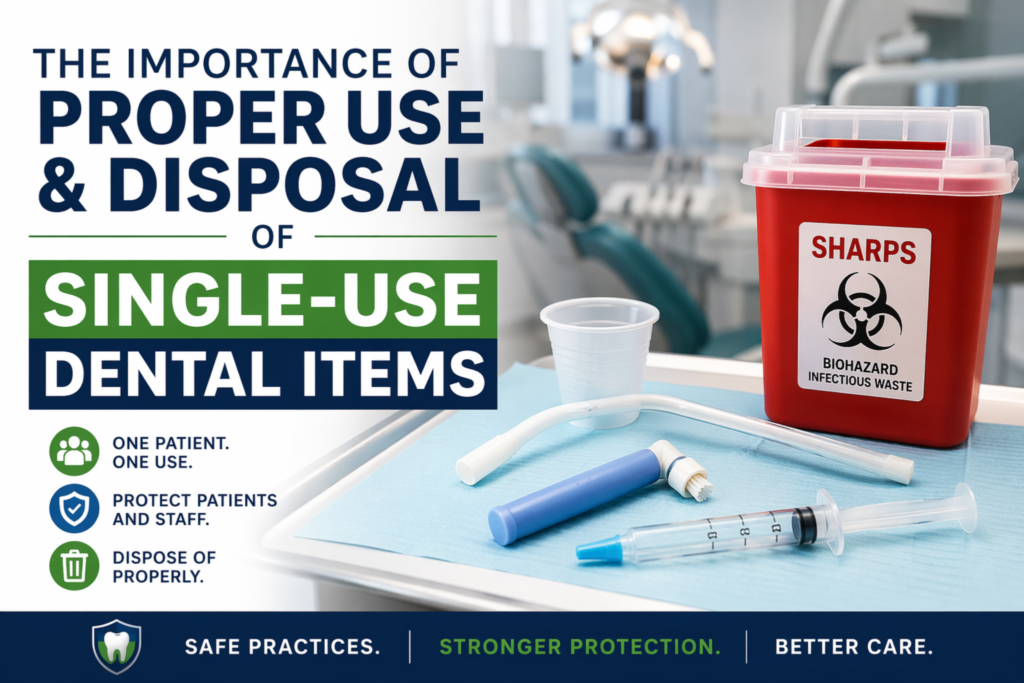
The Importance of Proper Use and Disposal of Single-Use Dental Items
The Importance of Proper Use and Disposal of Single-Use Dental Items
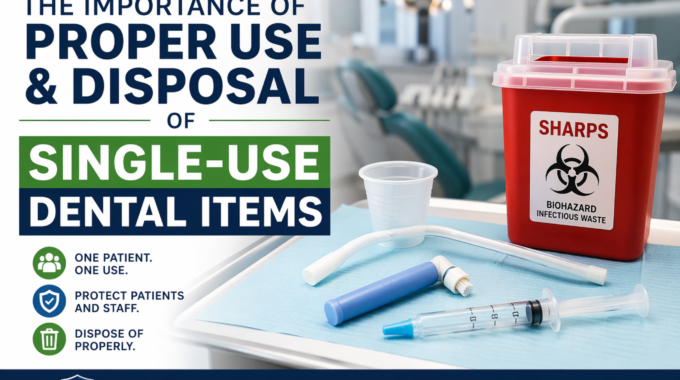
Infection control is a critical part of safe dental practice, and one area that deserves close attention is the proper use and disposal of single-use dental items. Reusing contaminated disposable dental sharps or instruments can potentially expose patients and staff to serious infections such as HIV, HBV, and HCV.
Failure to follow basic infection control protocols can have widespread consequences for both patient safety and regulatory compliance. In dental settings, proper handling of disposable items is not optional—it is a fundamental part of maintaining a safe clinical environment.
What Are Single-Use Dental Items?
Single-use items, also called disposable devices, are intended for one patient only and must be discarded after use. According to the Centers for Disease Control and Prevention (CDC), dental healthcare personnel should use single-use devices for one patient only and then dispose of them appropriately.
These items are generally not heat-tolerant and usually do not include validated reprocessing instructions for cleaning and sterilization. The CDC’s dental infection prevention guidance also reinforces that most single-use devices are labeled by the manufacturer for a single use and should be disposed of appropriately after that use.
Common Examples of Single-Use Dental Items
Examples of commonly used disposable items in dental settings include:
- Needles and anesthetic syringes
- Prophylaxis angles, cups, and brushes
- Saliva ejectors
- High-volume evacuator (HVE) tips
- Air/water syringe tips
- Certain orthodontic materials
Because of their design and material, attempting to reuse these items can compromise their integrity and significantly increase the risk of cross-contamination.
Why Proper Disposal Matters
Proper disposal procedures are just as important as proper single-use protocols. Contaminated needles and other sharps must be placed promptly in approved puncture-resistant sharps containers. OSHA’s Bloodborne Pathogens standard includes specific rules for contaminated sharps, and OSHA also emphasizes that sharps disposal containers must be readily accessible and located as close as feasible to the area where sharps are used.
By contrast, many non-sharp disposable items may typically be discarded in regular waste unless the manufacturer’s instructions or other applicable rules require a different method. When there is uncertainty, dental offices should review the manufacturer’s labeling and instructions for use before deciding whether an item is reusable or disposable.
Compliance Considerations for Dental Offices
Proper management of single-use devices is part of a broader infection prevention program. Dental offices should ensure staff are trained to recognize which items are single-use, understand when disposal is required, and know the correct method for sharps handling and waste segregation.
The U.S. Food and Drug Administration (FDA) also provides information about reprocessed single-use devices, making clear that this is a regulated area and not something a dental office should assume it can do on its own simply because an item appears intact after use.
Dental practices should also keep in mind that infection control compliance extends beyond disposable items. Related topics include surface disinfection, sterilization of reusable instruments, and written office protocols.
Why This Matters for Patient and Staff Safety
Cutting corners with disposable items may seem small, but the risks are significant. Reusing items meant for single use can create unnecessary exposure hazards, increase liability, and place both patients and dental team members at risk.
Strict adherence to single-use and disposal protocols helps support a safer dental environment, reduce compliance risk, and reinforce consistent infection control practices throughout the office.
Need help staying current with dental infection control and OSHA compliance requirements? Visit OSHA Review for practical compliance resources, training, and support for dental practices.
Related reading:
- Portable Handheld Dental X-Ray Units in California: Exemption Rules & Compliance Guide
- Infection Control in Dentistry: Understanding the Use of Surface Barriers
- Cleaning Contaminated Dental Instruments Prior to Sterilization

Related Posts