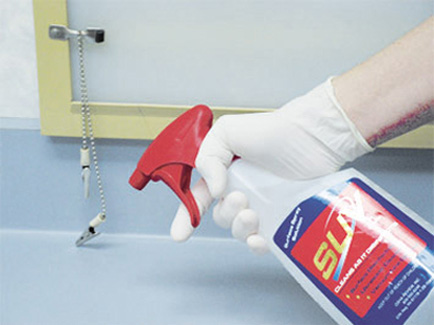
The October 2026 issue of Dental Bytes covers a flu season reminder for dental teams,…
Montana Dental Spore Testing Requirements (2026 Guide)
Are Montana Dental Offices Required to Perform Spore Testing?
Yes — and Montana’s rule does something unusual among the states in this guide. ARM 24.138.2301, the Board of Dentistry’s unprofessional conduct rule, makes it a disciplinable offense to fail “to comply with the provisions of the Guidelines for Infection Control in Dental Health-Care Settings, 2003” — subsection (1)(z) — and, separately, to fail “to adhere to any bloodborne pathogen regulation as outlined in Occupational Safety and Health Administration (OSHA) regulation contained in 29 CFR 1910.1030” — subsection (1)(l), which incorporates the federal standard by reference down to its Federal Register citation.
The 2003 CDC guidelines that (1)(z) names state the interval plainly: monitor every sterilizer at least weekly with a biological indicator. So Montana’s testing standard is not inferred from a general sanitation clause. It comes from a document the Board’s own rule makes binding.
Spore testing is one of three types of sterilization monitoring the CDC recommends — mechanical, chemical, and biological. Each confirms something different about a sterilization cycle.
The OSHA provision is the genuine outlier. Montana has no OSHA-approved State Plan, so federal OSHA enforces workplace safety in Montana dental offices. Yet the Board of Dentistry has written the federal Bloodborne Pathogens Standard into its own disciplinary rule — meaning a BBP failure in a Montana dental office is simultaneously a federal enforcement matter and an independent state licensing matter. Other states in this guide reference OSHA in their dental rules; Maine cites specific CFR sections in its practice-requirements chapter and New Mexico names OSHA alongside the CDC and the ADA. Montana goes further by making non-adherence its own act of unprofessional conduct.
This guide covers what ARM 24.138.2301 requires, how the CDC and OSHA provisions interact, what the “after a warning from the board” language means, what to do if a spore test fails, and how enforcement splits between the Board and federal OSHA.
Montana Dental Spore Testing Requirements at a Glance
| Requirement | Montana Standard |
| Spore testing requirement | Compliance with the CDC Guidelines for Infection Control in Dental Health-Care Settings, 2003, which call for weekly biological monitoring of every sterilizer |
| Governing regulation | ARM 24.138.2301(1)(z) — failing to comply with the 2003 CDC guidelines is unprofessional conduct |
| Sanitation provision | ARM 24.138.2301(1)(d) — failing to maintain an office in sanitary conditions consistent with current accepted sterilization and disinfection protocols for treatment rooms, sterilization and laboratory areas |
| OSHA standard incorporated by reference | ARM 24.138.2301(1)(l) — 29 C.F.R. § 1910.1030 (Bloodborne Pathogens), as published at 66 Fed. Reg. 5325 (Jan. 18, 2001) |
| Infectious waste | ARM 24.138.2301(1)(k) — storage, off-premises transport, and disposal per MCA §§ 75-10-1003 and 75-10-1005 |
| Regulating body | Montana Board of Dentistry, Department of Labor and Industry |
| Statutory authority | MCA §§ 37-1-319, 37-4-205, 37-4-408, 37-29-201, 75-10-1006 (authority); implementing MCA §§ 37-1-316, 37-1-319, 37-4-101, 37-4-405, 37-4-408, 75-10-1006 |
| Most recent rule amendment | September 21, 2024 |
| State OSHA plan | None — Montana is under federal OSHA jurisdiction |
| Enforcement agencies | Montana Board of Dentistry + federal OSHA |
The Montana Regulatory Framework for Dental Spore Testing
(1)(z) — The CDC Guidelines as a Named Disciplinary Item
ARM 24.138.2301 defines unprofessional conduct for purposes of MCA § 37-1-316 through a long alphabetical list, running from (a) through (aa). Item (z) is a single sentence: “Failing to comply with the provisions of the Guidelines for Infection Control in Dental Health-Care Settings, 2003.”
That construction matters. Montana did not write “shall follow generally accepted infection control practices” and leave the Board to establish what those are. It named a specific document, and made non-compliance with that document’s provisions its own listed offense — sitting in the same list as practicing on a suspended license, controlled substance violations, and sexual misconduct.
Because the named document is the 2003 CDC guidelines, the spore testing interval is not a matter of inference. Those guidelines recommend biological monitoring of sterilizers at least weekly, with a matching control from the same lot, along with chemical indicators inside packages and mechanical monitoring of every cycle. A Montana office that cannot produce a weekly spore log is out of compliance with the provisions of the document ARM 24.138.2301(1)(z) names.
(1)(l) — The Federal OSHA Standard, Written Into a Licensing Rule
Subsection (1)(l) makes it unprofessional conduct to fail “to adhere to any bloodborne pathogen regulation as outlined in Occupational Safety and Health Administration (OSHA) regulation contained in 29 CFR 1910.1030, as amended and published in the Federal Register, volume 66, on January 18, 2001 beginning at page 5325, which is hereby incorporated by reference.”
Several state dental boards in this guide mention OSHA. Maine’s rule cites specific CFR sections inside its practice-requirements chapter. New Mexico’s rule names OSHA alongside the CDC and the ADA. Montana goes a step further than either: it incorporates the Bloodborne Pathogens Standard by reference, with the precise Federal Register page, and makes non-adherence an act of unprofessional conduct — a licensing offense, not merely a cross-reference.
The consequence for a Montana practice is dual exposure from one set of facts. An exposure control plan that was never updated, training that was never documented, a hepatitis B vaccination offer that was never made — each is a federal OSHA citation risk and, independently, a matter the Board of Dentistry can discipline against. This is unusual anywhere, and especially so in a state with no OSHA-approved plan of its own.
(1)(d) — A Current-Protocol Standard and a Warning Trigger
Subsection (1)(d) covers “failing to maintain an office in sanitary conditions consistent with current accepted sterilization and disinfection protocols for treatment rooms, sterilization and laboratory areas, or operating under unsanitary conditions after a warning from the board.”
It does two things at once. The first clause is a dynamic standard — “current accepted sterilization and disinfection protocols” — which tracks the profession as it evolves, and so reaches CDC guidance published after 2003, including the 2016 Summary of Infection Prevention Practices in Dental Settings. That complements the static 2003 citation in (1)(z) rather than conflicting with it. The second clause names a separate offense: continuing to operate under unsanitary conditions after the Board has warned you. A warning from the Board is not a courtesy; it converts the situation into distinct grounds for discipline if conditions persist.
Notably, (1)(d) singles out the sterilization area by name, alongside treatment rooms and the laboratory. The instrument processing area is expressly within scope.
Supervision and Infectious Waste
Two further items in the list bear on sterilization compliance. Subsection (1)(f) makes it unprofessional conduct to fail “to supervise and monitor the actions of all dental auxiliaries, dental hygienists, and denturist interns in regard to patient care” — if an auxiliary runs the sterilizer, the oversight duty is the dentist’s. Subsection (1)(q) separately reaches employing or supervising “more dental hygienists or dental auxiliaries than the dentist can reasonably supervise.”
Subsection (1)(k) covers infectious waste: failing to store, transport off the premises, and dispose of infectious wastes as defined in MCA § 75-10-1003, in accordance with MCA § 75-10-1005. Sharps and regulated waste handling is a named item, not an afterthought.
No State OSHA Plan
Montana does not operate an OSHA-approved State Plan. Private dental practices fall under federal OSHA jurisdiction; state and local government workers in Montana are not covered by federal OSHA at all. What makes Montana distinctive is that this federal-only posture coexists with a dental board rule that has adopted the federal Bloodborne Pathogens Standard as its own — so the absence of a state OSHA program does not mean the absence of a state-level consequence for a BBP failure.
What Montana Dental Offices Must Do
1. Test Every Sterilizer Weekly
Run a biological spore test on every sterilizer at least weekly with a matching control from the same lot, as the 2003 CDC guidelines named in ARM 24.138.2301(1)(z) require.
2. Document Every Test and Every Load
Keep dated spore test results and cycle records. Compliance with the “provisions” of the CDC guidelines includes their recordkeeping provisions.
3. Maintain Full Bloodborne Pathogens Compliance
Exposure control plan, annual training, hepatitis B vaccination offers, sharps handling, PPE, and post-exposure follow-up under 29 C.F.R. § 1910.1030 — a Board matter in Montana as well as a federal one, under (1)(l).
4. Keep the Sterilization Area Itself to Current Protocol
Subsection (1)(d) names treatment rooms, the sterilization area, and laboratory areas specifically. Clean/dirty separation, workflow, and surface management in the processing area are in scope.
5. Supervise Auxiliaries Who Process Instruments
Subsections (1)(f) and (1)(q) make supervision — and not taking on more supervised staff than you can reasonably oversee — the dentist’s named responsibility.
6. Handle Infectious Waste to MCA § 75-10-1005
Storage, off-premises transport, and disposal of infectious waste are covered by (1)(k) and enforceable as unprofessional conduct.
What to Do If a Spore Test Fails in Montana
- Remove the sterilizer from service immediately
- Review loading technique, indicator expiration, and cycle settings for cause
- Retest, or have the unit serviced and retested, before returning it to use
- Recall and reprocess items sterilized since the last negative test, per the 2003 CDC guidelines
- Document the failure, the corrective action, and the retest result — following the CDC protocol is itself what ARM 24.138.2301(1)(z) requires
For a full step-by-step protocol, see our guide: What Happens If Your Spore Test Fails?
Who Enforces Spore Testing Requirements in Montana?
1. Montana Board of Dentistry
Administers ARM 24.138.2301 under the Department of Labor and Industry, and may discipline under MCA § 37-1-316 and § 37-1-319 for failing to comply with the 2003 CDC guidelines, for unsanitary conditions inconsistent with current protocols, or for failing to adhere to the federal Bloodborne Pathogens Standard.
2. Federal OSHA
Enforces 29 C.F.R. § 1910.1030 and related employee-protection requirements directly, since Montana has no OSHA-approved State Plan — separately from, and in addition to, any Board action on the same facts.
Montana Spore Testing Compliance Checklist
✅ Weekly biological spore testing performed on every sterilizer
✅ Matching control indicator run from the same lot
✅ Chemical indicator used inside every instrument package
✅ Mechanical monitoring (time/temperature/pressure) recorded for every load
✅ Dated spore testing log maintained per CDC recordkeeping provisions
✅ Written positive-test recall and corrective action procedure
✅ Bloodborne pathogens exposure control plan current, with training documented
✅ Sterilization and laboratory areas maintained to current accepted protocols
✅ Infectious waste stored, transported, and disposed of per MCA § 75-10-1005
✅ Supervision of auxiliaries performing instrument processing documented
How Often Should Montana Dental Offices Test?
Weekly. ARM 24.138.2301(1)(z) makes non-compliance with the CDC Guidelines for Infection Control in Dental Health-Care Settings, 2003 an act of unprofessional conduct, and those guidelines call for biological monitoring of every sterilizer at least weekly. Subsection (1)(d) reinforces the point with a dynamic standard tied to “current accepted sterilization and disinfection protocols,” which keeps later CDC guidance in play as well.
For a full breakdown of testing frequency best practices, see: How Often Do Dental Offices Need Spore Testing?
Frequently Asked Questions: Montana Dental Spore Testing
Does Montana law require weekly biological spore testing?
Effectively yes. ARM 24.138.2301(1)(z) makes failing to comply with the 2003 CDC infection control guidelines unprofessional conduct, and those guidelines call for weekly biological monitoring of every sterilizer.
Why does a Montana dental rule cite an OSHA regulation?
ARM 24.138.2301(1)(l) incorporates the federal Bloodborne Pathogens Standard, 29 C.F.R. § 1910.1030, by reference — citing its Federal Register publication at volume 66, January 18, 2001, page 5325 — and makes failure to adhere to it an act of unprofessional conduct. That gives the Board of Dentistry independent authority over BBP compliance.
Does Montana have its own OSHA program?
No. Montana is not an OSHA-approved State Plan state, so federal OSHA covers most private sector workers, including dental practice employees. The unusual part is that Montana’s dental board rule adopts the federal bloodborne pathogens standard anyway, creating a second, state-level consequence for the same failure.
What does “after a warning from the board” mean in subsection (1)(d)?
Subsection (1)(d) names two things: failing to maintain sanitary conditions consistent with current accepted sterilization and disinfection protocols, and operating under unsanitary conditions after the Board has issued a warning. The second is its own listed ground, so continuing to operate after a warning is treated as a distinct offense.
Does the rule cover the sterilization area specifically?
Yes. Subsection (1)(d) names “treatment rooms, sterilization and laboratory areas” expressly, so the instrument processing area is within the rule’s scope rather than being covered only by a general office-cleanliness standard.
When was ARM 24.138.2301 last updated?
The rule was most recently amended effective September 21, 2024, with earlier amendments in 2021 and 2019.
Stay Compliant with the Spore Check System
The Spore Check System from OSHA Review makes it simple to meet the CDC-guideline standard ARM 24.138.2301(1)(z) makes binding, with full documentation ready if the Board of Dentistry or federal OSHA ever asks. Our service includes:
✔ Pre-labeled biological indicators mailed directly to your practice
✔ Easy return shipping with prepaid envelopes
✔ Results returned within 24–48 hours
✔ Digital records retained and organized for Board and OSHA review
✔ Documentation support built to demonstrate CDC-guideline compliance
👉 Learn more about the Spore Check System
Regulatory Sources
- ARM 24.138.2301 — Unprofessional Conduct (Montana Board of Dentistry)
- MCA § 37-1-316 — Unprofessional conduct; MCA § 37-1-319 — Sanctions
- MCA §§ 75-10-1003, 75-10-1005 — Infectious waste definitions and requirements
- Montana Board of Dentistry
- 29 C.F.R. § 1910.1030 — OSHA Bloodborne Pathogens Standard
- OSHA State Plans — Montana is under federal OSHA jurisdiction
- CDC — Guidelines for Infection Control in Dental Health-Care Settings, 2003
- CDC — Best Practices for Sterilization Monitoring in Dental Settings
See also: Dental Sterilizer Monitoring Requirements by State

Related Posts