The October 2026 issue of Dental Bytes covers a flu season reminder for dental teams,…
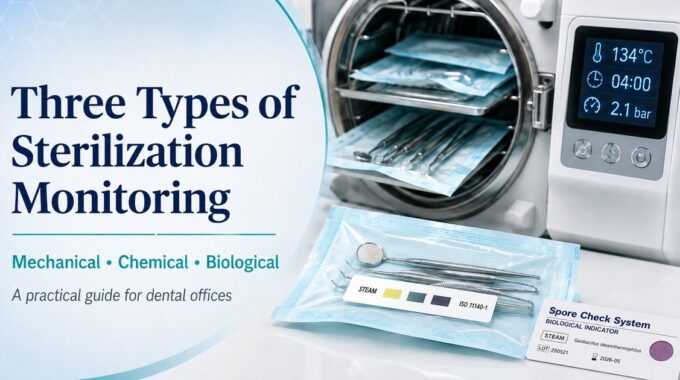
Sterilizer Monitoring in the Dental Office: Are You Using All Three Methods?
Proper sterilization is an essential part of infection prevention in the dental office. But how do you know your sterilizer is working properly? The US Centers for Disease Control and Prevention (CDC) recommends three types of sterilization monitoring – mechanical, chemical, and biological – because each provides different information about the sterilization process.
This post is part of our Dental Bytes eNewsletter 2026 hub, where you can access each monthly issue.
Three Types of Sterilization Monitoring
Mechanical Monitoring
Mechanical monitoring involves checking the sterilizer’s physical parameters, such as time, temperature, and pressure. These parameters should be monitored and documented for every sterilizer load. Mechanical monitoring can provide an early indication that a sterilization cycle did not reach the conditions required for effective sterilization. However, it cannot confirm that the sterilizing agent reached every instrument inside every package.
Chemical Monitoring
Chemical indicators respond to specific conditions during the sterilization process, typically by changing color. The CDC recommends using a chemical indicator inside every package. If the internal indicator cannot be seen from outside the package, an external indicator should also be used. Chemical indicators provide an additional layer of monitoring, can alert dental healthcare personnel to potential problems with a sterilization cycle, and can also provide an early warning that a sterilizer may not be functioning properly.
Biological Monitoring: The Spore Test
Biological monitoring, commonly called spore testing, provides the most direct assessment of whether a sterilization process is effective. The CDC recommends biological monitoring at least weekly. A biological indicator should also be used with every load containing an implantable device. State requirements may differ, so dental practices should be familiar with the laws and dental board requirements applicable in their jurisdiction.
What If You Get a Positive Spore Test?
A positive biological indicator requires prompt investigation. The CDC recommends reviewing sterilization procedures and repeating the biological test. If the repeat test is positive, the sterilizer should remain out of service until the problem has been identified and corrected and the sterilizer successfully passes appropriate biological monitoring.
Potential causes of sterilization failure include improper instrument cleaning, incorrect sterilizer operation, improper loading or overloading, and improper or inappropriate packaging.
Don’t Rely on Just One Method
Effective sterilization monitoring is more than performing a weekly spore test. Mechanical, chemical, and biological monitoring work together to provide different layers of assurance that sterilization is effective. Dental practices should regularly review their sterilization procedures to ensure that:
- Mechanical monitoring is performed for every load.
- Chemical indicators are used appropriately.
- Biological monitoring is performed at least weekly.
- Monitoring results are documented.
- Staff know how to respond to a failed indicator or positive spore test.
For our OSHA Review Subscribers: Additional information about sterilization monitoring can be found in your OSHA Review binder.
Frequently Asked Questions
What are the three types of sterilization monitoring?
The CDC recommends mechanical, chemical, and biological monitoring. Each provides different information about the sterilization process, which is why they are used together rather than as alternatives to one another.
How often should biological monitoring be performed?
The CDC recommends biological monitoring at least weekly. A biological indicator should also be used with every load containing an implantable device. State requirements may differ, so dental practices should be familiar with the laws and dental board requirements that apply in their jurisdiction.
Does a chemical indicator go inside or outside the package?
The CDC recommends using a chemical indicator inside every package. If the internal indicator cannot be seen from outside the package, an external indicator should also be used.
Is mechanical monitoring alone enough to confirm sterilization?
No. Mechanical monitoring checks the sterilizer’s physical parameters — time, temperature, and pressure — and can give an early indication that a cycle did not reach the required conditions. But it cannot confirm that the sterilizing agent reached every instrument inside every package.
What should I do if a spore test comes back positive?
A positive biological indicator requires prompt investigation. The CDC recommends reviewing sterilization procedures and repeating the biological test. If the repeat test is positive, the sterilizer should remain out of service until the problem has been identified and corrected and the sterilizer successfully passes appropriate biological monitoring.
What causes a sterilization failure?
Potential causes include improper instrument cleaning, incorrect sterilizer operation, improper loading or overloading, and improper or inappropriate packaging.
Related OSHA Review Resources
- Why Biological Monitoring Matters in Dental Offices
- How Often Do Dental Offices Need Spore Testing?
- What Happens If Your Spore Test Fails?
- Dental Sterilizer Monitoring Requirements by State (2026 Guide)
- OSHA Review’s Spore Check System — Sterilizer Monitoring
- Dental Bytes eNewsletter 2026 Hub
About OSHA Review, Inc.
Since 1992, OSHA Review, Inc. has supported dental professionals with regulatory compliance resources, infection control guidance, continuing education, sterilizer monitoring, surface disinfectant products, and dosimetry monitoring services. For more information, visit oshareview.com or call 800-555-6248.
This post is part of the Dental Bytes eNewsletter 2026 series. Visit the hub to access all monthly updates.

Related Posts