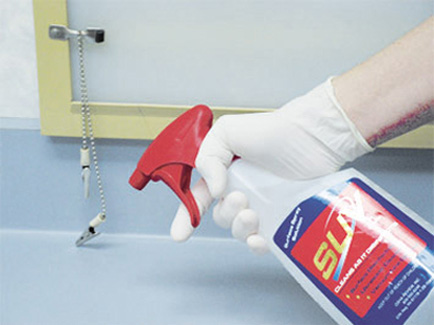
The October 2026 issue of Dental Bytes covers a flu season reminder for dental teams,…
Idaho Dental Spore Testing Requirements (2026 Guide)
Are Idaho Dental Offices Required to Perform Spore Testing?
Yes — and Idaho states the interval directly in the rule text, the same conditional structure Oregon uses. Under IDAPA 24.31.01, Rule 200.09, “heat sterilizing devices must be tested each calendar week in which patients are treated,” with testing results retained for the current calendar year and the two preceding calendar years. Licensees and dental assistants must also comply with current CDC infection control guidelines covering personal protective equipment, instrument sterilization, disinfection of contact surfaces, and contaminated waste disposal.
Spore testing is one of three types of sterilization monitoring the CDC recommends — mechanical, chemical, and biological. Each confirms something different about a sterilization cycle.
Idaho backs the numeric rule with a distinctive dual-standard discipline test: Rule 300.02.i defines “unsanitary or unsafe office conditions” as unprofessional conduct when measured against both “the customary practice and standards of the dental profession in the state of Idaho” and CDC guidelines incorporated by reference — giving the Board two separate benchmarks to evaluate a noncompliant office against, not just one.
This guide covers what Rule 200.09 requires, how it connects to Idaho’s unprofessional conduct and malpractice standards, what to do if a spore test fails, and how federal OSHA applies to Idaho dental practices.
Idaho Dental Spore Testing Requirements at a Glance
| Requirement | Idaho Standard |
|---|---|
| Spore testing requirement | Biological monitoring of every heat sterilizer each calendar week in which patients are treated (IDAPA 24.31.01, Rule 200.09) |
| Recordkeeping | Testing results retained for the current calendar year plus the two preceding calendar years (3-year window) |
| Governing regulation | IDAPA 24.31.01, Rule 200.09 — Infection Control |
| Regulating body | Idaho State Board of Dentistry |
| Discipline standard | Rule 300.02.i — unsanitary/unsafe office conditions measured against both customary professional standards AND incorporated CDC guidelines |
| Malpractice standard | Idaho Code § 54-924 — care that fails to meet the standard provided by other qualified dentists in the same or similar community |
| State OSHA plan | No — federal OSHA enforces directly |
| Enforcement agencies | Idaho State Board of Dentistry + federal OSHA |
The Idaho Regulatory Framework for Dental Spore Testing
Rule 200.09 — A Direct Numeric Testing Requirement
Unlike states that rely solely on CDC incorporation to imply a testing interval, Idaho states the requirement directly in its own administrative code: heat sterilizing devices must be biologically tested each calendar week in which patients are treated. This is the same conditional-weekly structure used in Oregon’s rule — tying the obligation to weeks of active patient care rather than the calendar alone — but it’s written into Idaho’s own code independently. Testing results must be kept for three years: the current calendar year plus the two preceding years.
A Dual-Standard Discipline Test for Office Conditions
Rule 300.02.i defines unprofessional conduct to include unsanitary or unsafe office conditions “as determined by the customary practice and standards of the dental profession in the state of Idaho and CDC guidelines as incorporated by reference in these rules.” That “and” matters: the Board isn’t limited to a single CDC-compliance test — it can also point to what’s customary among other Idaho dental practices, giving inspectors two independent benchmarks rather than one.
Backed by a Locality-Based Malpractice Standard
Idaho Code § 54-924 defines malpractice as providing dental care that fails to meet the standard of care provided by other qualified dentists in the same or similar community, considering the dentist’s training, experience, and the degree of expertise held out to the public. This locality-flavored standard of care is a different framing than the general negligence standards used in most other states in this guide, and it works alongside Rule 300.02.i’s office-conditions test.
Federal OSHA, Not a State Plan
Idaho does not operate its own OSHA-approved state plan. Workplace safety requirements, including the Bloodborne Pathogens Standard, are enforced directly by federal OSHA’s Boise Area Office rather than a state labor agency, giving Idaho dental offices a single OSHA point of contact.
What Idaho Dental Offices Must Do
1. Test Every Heat Sterilizer Weekly in Patient-Treatment Weeks
Run a biological monitoring test on every heat sterilizing device each calendar week in which patients are treated, per Rule 200.09.
2. Retain Results for Three Years
Keep spore testing results for the current calendar year and the two preceding calendar years.
3. Follow Current CDC Infection Control Guidelines in Full
Comply with CDC guidance on PPE, instrument sterilization, surface disinfection, and contaminated waste disposal — not just the testing requirement.
4. Maintain Office Conditions That Meet Both Benchmarks
Keep sanitary, safe office conditions consistent with both customary Idaho dental practice standards and incorporated CDC guidelines.
5. Layer in Mechanical and Chemical Indicators
Use a chemical indicator inside every instrument package and monitor time, temperature, and pressure for every load.
6. Maintain Bloodborne Pathogens Compliance for Federal OSHA
Keep exposure control plans and Bloodborne Pathogens training current, since federal OSHA enforces workplace safety in Idaho.
What to Do If a Spore Test Fails in Idaho
- Remove the sterilizer from service immediately
- Review loading technique, indicator expiration, and cycle settings for cause
- Retest, or have the unit serviced and retested, before returning it to use
- Document the failure, the corrective action, and the retest result in the 3-year testing record required by Rule 200.09
For a full step-by-step protocol, see our guide: What Happens If Your Spore Test Fails?
Who Enforces Spore Testing Requirements in Idaho?
1. Idaho State Board of Dentistry
Administers Rule 200.09 and can pursue discipline under Rule 300.02.i for unsanitary or unsafe office conditions, or under Idaho Code § 54-924 for malpractice.
2. Federal OSHA
Enforces the Bloodborne Pathogens Standard and related workplace safety requirements through the Boise Area Office, since Idaho does not operate its own OSHA-approved state plan.
Idaho Spore Testing Compliance Checklist
✅ Biological spore testing performed on every heat sterilizer each week patients are treated
✅ Matching control indicator run from the same lot
✅ Chemical indicator used inside every instrument package
✅ Mechanical monitoring (time/temperature/pressure) recorded for every load
✅ Dated spore testing log maintained for 3 years (current year + 2 preceding)
✅ Current CDC infection control guidelines followed in full
✅ Office conditions consistent with customary Idaho dental practice standards
✅ Bloodborne Pathogens Standard compliance maintained for federal OSHA
How Often Should Idaho Dental Offices Test?
Idaho’s rule states the interval directly: each calendar week in which patients are treated. For a practice running a normal weekly schedule, this means weekly testing on every heat sterilizer, with results kept on file for three years.
For a full breakdown of testing frequency best practices, see: How Often Do Dental Offices Need Spore Testing?
Frequently Asked Questions: Idaho Dental Spore Testing
Does Idaho law require weekly biological spore testing?
Yes, with a specific condition: Rule 200.09 requires testing each calendar week in which patients are treated, rather than every calendar week regardless of whether the office saw patients.
How long must Idaho dental offices keep spore testing records?
Three years — the current calendar year plus the two preceding calendar years.
What happens if an Idaho dental office doesn’t perform spore testing?
A failure to meet Rule 200.09’s testing requirement can be treated as an unsanitary or unsafe office condition under Rule 300.02.i, measured against both customary Idaho dental practice standards and CDC guidelines, supporting Board discipline.
Does Idaho have its own OSHA program?
No. Idaho does not operate a state OSHA plan — federal OSHA enforces workplace safety directly through its Boise Area Office.
What is Idaho’s malpractice standard for dentists?
Idaho Code § 54-924 defines malpractice as care that fails to meet the standard provided by other qualified dentists in the same or similar community, considering the dentist’s training, experience, and expertise.
Stay Compliant with the Spore Check System
The Spore Check System from OSHA Review makes it simple to meet Idaho’s weekly biological monitoring requirement under Rule 200.09, with full documentation ready if the Board of Dentistry or federal OSHA ever asks. Our service includes:
✔ Pre-labeled biological indicators mailed directly to your practice
✔ Easy return shipping with prepaid envelopes
✔ Results returned within 24–48 hours
✔ Digital records retained and organized beyond Idaho’s 3-year requirement
✔ Documentation support built for Board and federal OSHA review
👉 Learn more about the Spore Check System
Regulatory Sources
- IDAPA 24.31.01 — Rules of the Idaho State Board of Dentistry: dopl.idaho.gov
- Idaho Code § 54-924 — Board of Dentistry disciplinary authority: legislature.idaho.gov
- Idaho State Board of Dentistry: dopl.idaho.gov
- Federal OSHA — Boise Area Office: osha.gov
- CDC — Guidelines for Infection Control in Dental Health-Care Settings—2003: cdc.gov
See also: Dental Sterilizer Monitoring Requirements by State

Related Posts