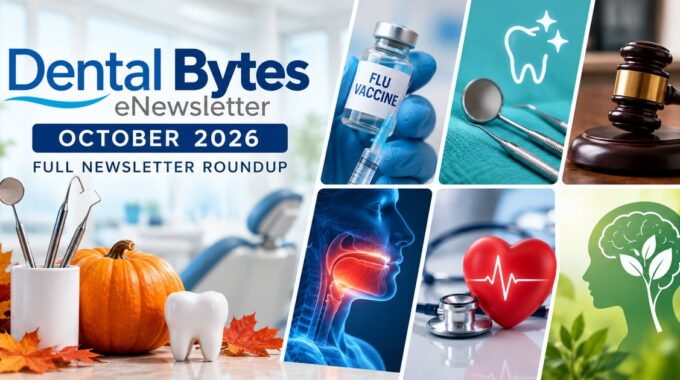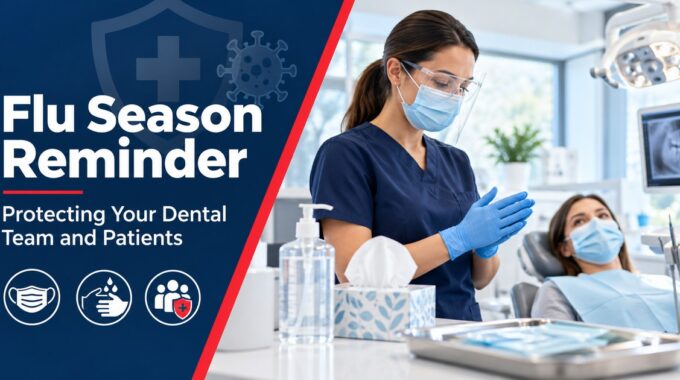
The October 2026 issue of Dental Bytes covers a flu season reminder for dental teams,…
Dental Infection Control: Lessons from a Recent Dental Practice Incident (2026)
A recent public health notification involving a Philadelphia dental practice is a stark reminder of why dental infection control must be maintained rigorously in every dental office. In May 2026, the City of Philadelphia Department of Public Health advised patients of the practice to contact their healthcare providers regarding testing for hepatitis B, hepatitis C, and HIV after state regulators identified unsanitary practices and temporarily suspended the dentist’s license.
Health officials emphasized that the risk of infection is believed to be low and that no infections have been linked to the practice. However, the clinic was closed pending corrective action, and patients who received treatment between April 2025 and May 2026 were notified.
This post is part of our Dental Bytes eNewsletter 2026 hub, where you can access each monthly issue.
In This Issue
Featured Topic: Infection Control Failures and What Every Dental Practice Should Know
What Happened at the Philadelphia Dental Practice
According to reports, concerns included the reuse of items intended for single-patient use and other dental infection control deficiencies that could potentially allow cross-contamination between patients. The incident generated significant media attention and prompted public health officials to notify patients who received treatment at the practice over more than a year.
While such events are uncommon, they highlight the critical role infection prevention and control plays in protecting patients and maintaining public trust. Even when the actual risk of disease transmission is low, infection control breaches can result in:
- Patient anxiety and loss of confidence in the practice
- Regulatory investigations and potential license suspension
- Significant reputational harm to the dentist and practice
- Operational disruptions that may force a temporary or permanent closure
Why Dental Infection Control Is a Non-Negotiable Standard
Dental infection control is not simply a regulatory obligation—it is a fundamental component of patient safety and professional responsibility. Every dental office handles instruments and materials that come into direct contact with patients’ blood and oral fluids. Without consistent adherence to established protocols, even routine procedures carry the risk of pathogen transmission.
The CDC’s Guidelines for Infection Control in Dental Health-Care Settings provide the foundation for safe practice. Additionally, individual states may impose requirements that go beyond federal guidance. Dental practices should be familiar with both.
Incidents like the one in Philadelphia are a reminder that dental infection control failures—however rare—are preventable. The protocols exist for a reason, and every team member plays a role in maintaining them.
Common Dental Infection Control Deficiencies to Watch For
Regulatory investigations of dental practices have identified recurring areas where infection control can break down. Dental offices should regularly evaluate the following:
- Reuse of single-use items: Items labeled for single-patient use must never be reused. This includes needles, cartridges, and certain disposable instruments.
- Improper instrument sterilization: All critical instruments (those that penetrate soft tissue or bone) must be sterilized between uses. Spore testing should be performed regularly to confirm sterilizer function.
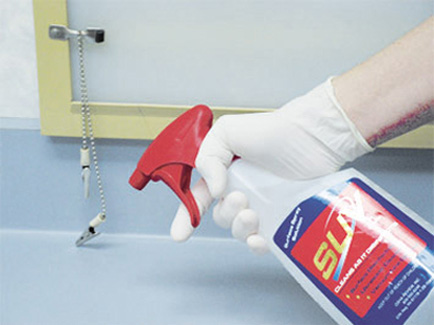
- Inadequate surface disinfection: Clinical contact surfaces must be disinfected or covered with barriers between patients.
- Handwashing and glove protocols: Proper hand hygiene and appropriate glove use are among the most fundamental infection prevention measures.
- Gaps in staff training: Team members who are unfamiliar with current protocols are one of the most common sources of compliance breakdowns.
What Dental Practices Should Do Now
Dental offices should use incidents like this as an opportunity to review their infection control protocols from top to bottom. Consistent adherence to established procedures remains one of the most effective ways to protect patients, staff, and the reputation of the dental profession.
Specifically, practices should:
- Verify compliance with current CDC guidelines and applicable state requirements
- Confirm that all single-use items are discarded after each patient
- Review instrument sterilization logs and spore testing records
- Ensure staff receive documented, ongoing infection control training
- Conduct periodic internal audits of infection prevention procedures
Dental Infection Control Compliance Checklist
- Confirm your infection control coordinator is designated and trained.
- Review your written infection control plan—update it if protocols have changed.
- Verify that sterilizer spore testing is current and results are documented.
- Audit single-use item handling procedures and confirm no reuse is occurring.
- Check that surface disinfectants are EPA-registered and used per label instructions.
- Confirm sharps disposal containers are in use and replaced on schedule.
- Ensure all team members can locate and follow your exposure incident protocol.
- Document all infection control training in employee records.
Quick Summary: Dental Infection Control Reminders
- Never reuse items labeled for single-patient use.
- Sterilize all critical instruments and verify sterilizer function with spore testing.
- Disinfect or barrier-protect clinical contact surfaces between every patient.
- Provide and document ongoing infection control training for all team members.
- Dental infection control failures—however rare—are preventable with consistent protocols.
Related OSHA Review Resources
- Dental Bytes eNewsletter 2026 Hub
- Dental Bytes – May 2026: Dental Record Retention Requirements
- Spore Check System – Sterilizer Monitoring
- OSHA Review Compliance Program
- CDC Guidelines for Infection Control in Dental Health-Care Settings
About OSHA Review, Inc.
Since 1992, OSHA Review, Inc. has supported dental professionals with regulatory compliance resources, infection control guidance, continuing education, sterilizer monitoring, surface disinfectant products, and dosimetry monitoring services. For more information, visit oshareview.com or call 800-555-6248.
This post is part of the Dental Bytes eNewsletter 2026 series. Visit the hub to access all monthly updates.

Related Posts