What Are Arizona’s Dental Spore Testing Requirements? Dental offices in Arizona are expected to follow…
How Often Do Dental Offices Need Spore Testing?
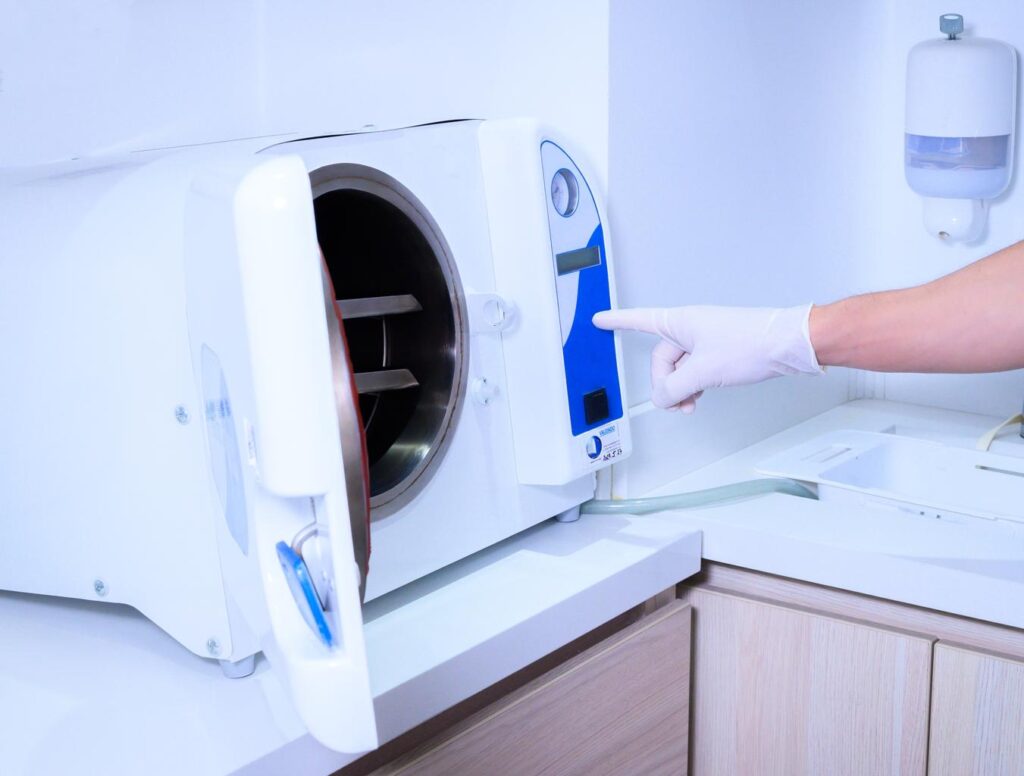 Sterilization monitoring in dental offices is a critical component of infection control in dental practices. One of the most important tools used to verify that sterilization equipment is working properly is spore testing, also known as biological monitoring.
Dental offices often ask: How often do dental offices need spore testing? The answer depends on regulatory requirements, best practices, and manufacturer recommendations.
This guide explains how frequently dental practices should perform spore testing, why it matters, and how dental offices can stay compliant with infection control standards.
What Is Spore Testing in a Dental Office?
Spore testing is a biological monitoring process used to confirm that a dental sterilizer (autoclave) is effectively killing microorganisms, including highly resistant bacterial spores.
During a spore test:
-
A test strip or vial containing bacterial spores is placed in the sterilizer.
-
The sterilizer cycle runs as usual.
-
The test is sent to a laboratory for incubation and analysis.
-
The results confirm whether the sterilization cycle successfully destroyed the spores.
Because bacterial spores are among the most resistant microorganisms, a successful test confirms that the sterilizer is capable of killing other harmful pathogens as well.
Spore testing is considered the gold standard for sterilization monitoring in dental practices.
How Often Do Dental Offices Need Spore Testing?
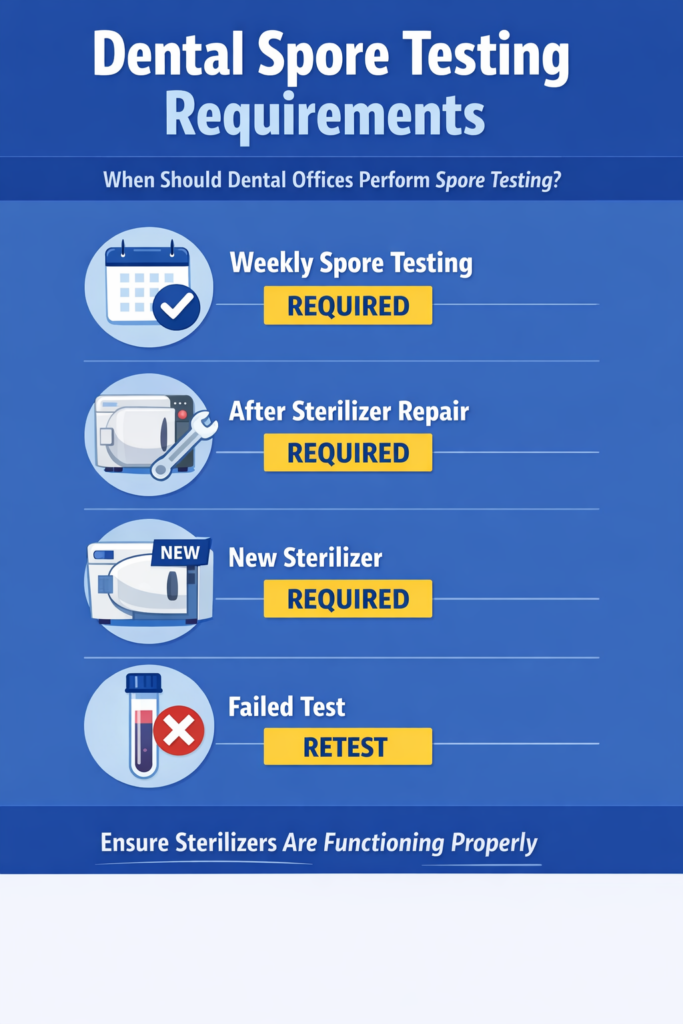
Most dental offices should perform spore testing at least once per week for each sterilizer.
Weekly biological monitoring is recommended by several key authorities, including:
-
State dental boards and regulatory agencies
-
Autoclave manufacturers
Performing spore testing weekly helps ensure that sterilization failures are identified quickly before patient safety is compromised.
Many dental practices choose mail-in spore testing services that provide regular test kits and laboratory verification.
When Additional Spore Testing Is Required
In addition to weekly monitoring, dental offices should perform spore testing in several other situations.
- After Installing a New Sterilizer – A new autoclave should undergo biological monitoring to confirm proper operation before it is used for patient instruments.
- After Sterilizer Repairs or Maintenance – If a sterilizer is repaired or undergoes major servicing, a spore test should be conducted before returning the unit to routine use.
- After a Sterilization Failure – If a biological indicator test comes back positive, additional testing is required to determine whether the sterilizer is functioning correctly.
- During Training or Quality Assurance Programs – Some dental offices perform additional testing as part of internal infection control programs or compliance training.
Why Spore Testing Is Important for Dental Compliance
Regular spore testing protects both patients and dental staff by confirming that sterilization procedures are effective.
Key benefits include:
-
Ensuring patient safety
-
Verifying proper sterilizer operation
-
Meeting regulatory infection control requirements
-
Documenting compliance during inspections
-
Identifying sterilization failures early
Dental offices that fail to properly monitor sterilization processes may risk regulatory violations, liability exposure, and patient safety concerns.
Spore Testing Recordkeeping Requirements
Dental offices should maintain records of all spore testing results.
These records typically include:
-
Date of the test
-
Sterilizer identification
-
Test result (pass/fail)
-
Corrective actions if necessary
-
Laboratory report documentation
Maintaining organized records is important for regulatory inspections and infection control documentation.
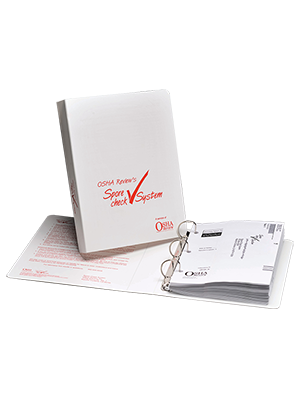
Many dental practices keep these records as part of their infection control log or compliance binder.
Choosing a Spore Testing Service
When selecting a spore testing program, dental offices should look for services that provide:
-
Regular test kit delivery
-
Laboratory analysis
-
Compliance documentation
-
Rapid result reporting
-
Easy recordkeeping for inspections
Using a reliable spore testing service helps ensure that dental practices remain compliant with infection control standards.
Frequently Asked Questions About Dental Spore Testing
Is weekly spore testing required in dental offices?
Most infection control guidelines recommend weekly spore testing for each sterilizer used in a dental practice.
Can dental offices perform spore testing in-house?
While some systems allow in-office incubation, many dental practices use mail-in laboratory services to verify sterilization results.
What happens if a spore test fails?
If a spore test returns a positive result, the sterilizer should be removed from service and retested. Instruments processed since the last negative test may need to be reprocessed depending on the situation.
Stay Compliant With Dental Infection Control Requirements
Biological monitoring plays an essential role in dental infection control and regulatory compliance. By performing weekly spore testing and maintaining proper documentation, dental offices can verify that sterilization procedures are protecting patients and staff.
Dental practices should also ensure their team members receive regular infection control training and stay up to date with regulatory requirements.
OSHA Review, Inc. is a registered continuing education provider in the State of California, specializing in Dental Practice Act, infection control, and Cal/OSHA training. OSHA Review subscribers in California receive updated regulatory compliance and infection control training through our bi-monthly newsletter.
In addition, OSHA Review, Inc. provides dental sterilizer monitoring services in all 50 states through the Spore Check System, a convenient mail-in spore testing program for dental offices. The Spore Check System is endorsed by the Arizona Dental Association, Ohio Dental Association, and Texas Dental Association, reflecting its trusted role in helping dental practices monitor sterilization and maintain infection control compliance.

Related Posts