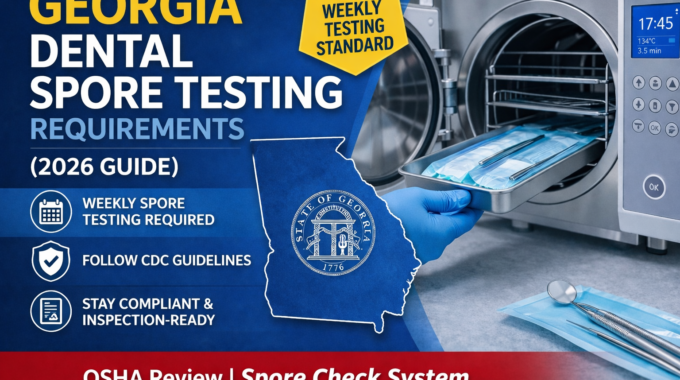
Georgia Dental Spore Testing Requirements (2026 Guide for Compliance) Dental offices in Georgia must follow…
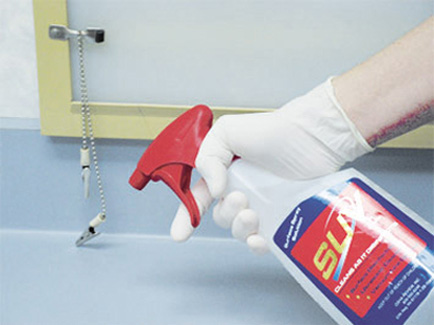
Surface Disinfection in Dental Offices: Cleaning, Contact Time & Compliance
Dental surface disinfection is one of the most important parts of infection control, but it is also one of the most misunderstood. In many offices, products are used quickly, surfaces are wiped too soon, or staff members assume cleaning and disinfecting are the same step. They are not.
If your goal is to protect patients, protect staff, and stay compliant with infection control expectations, your team needs to understand how disinfectants are meant to be used, what the label actually requires, and why contact time matters.
Cleaning and Disinfecting Are Not the Same Thing
Before a disinfectant can work effectively, the surface must first be cleaned. Debris, blood, saliva, and other contamination can interfere with the disinfectant’s ability to fully contact the surface. According to the CDC’s Guidelines for Infection Control in Dental Health-Care Settings, cleaning should precede disinfection and sterilization because it removes debris and both organic and inorganic contamination.
Review the CDC guidance here: CDC Guidelines for Infection Control in Dental Health-Care Settings.
This is one reason dental teams should avoid assuming that every disinfectant can also serve as a cleaner in every situation. Staff should always follow the product label and safety data sheet instructions for proper use.
Why EPA Registration Matters
Surface disinfectants used in dental settings should be EPA-registered and used exactly as directed on the label. The EPA explains that the product label is what tells users where the product can be used, how it should be applied, how long it must remain wet, and whether it is approved for the intended-use site or pathogen claim.
See EPA’s disinfectant information here: Selected EPA-Registered Disinfectants.
The EPA also notes that products may be sold under different brand names, which is why the EPA registration number is so important when verifying a disinfectant. In other words, offices should not rely on marketing language alone. They should verify the product’s registration and use directions.
Contact Time: One of the Most Overlooked Requirements
One of the biggest mistakes in surface disinfection is not allowing the product to remain visibly wet for the full required contact time. The EPA explains that contact time is the amount of time the disinfectant must stay on the surface in order to be effective. If the surface dries too early, more product may need to be applied.
This is especially important in busy dental operatories where surfaces may be wiped too soon in an effort to turn over a room quickly. A shorter-than-required wet time can reduce disinfectant effectiveness and undermine your infection control protocol.
What Dental Teams Should Look For in a Disinfectant
- EPA registration
- Clear label directions for use
- Appropriate efficacy claims for the intended setting
- Practical contact times for clinical workflow
- Compatibility with the surfaces and equipment in the office
- Cleaner/disinfectant functionality when allowed by the label
Dental offices should also train staff to understand the difference between cleaning, disinfecting, and sterilizing, and to recognize that each step has a separate purpose in infection prevention.
Common Surface Disinfection Mistakes
- Applying disinfectant to a visibly soiled surface without cleaning first
- Using the wrong product for the intended surface or setting
- Failing to keep the surface wet for the full contact time
- Not following label directions for dilution or application
- Assuming all disinfectants work the same way
- Choosing products based only on convenience instead of compliance and efficacy
A Practical Approach for Dental Offices
A strong surface disinfection protocol should be simple, repeatable, and based on label instructions. That means cleaning first when needed, applying the disinfectant correctly, allowing proper contact time, and making sure the product is appropriate for the clinical environment.
For more infection control reading, you may also be interested in Infection Control in Dentistry: Understanding the Use of Surface Barriers, which explains when barriers can help reduce contamination on clinical contact surfaces.
You can also review Standard Precautions: Simple Steps That Make a Big Difference for a broader look at day-to-day infection control practices in the dental office.
Additional OSHA Review articles on this topic are available in our Dental Infection Control content archive.
Learn More About SUV Ultra 5 Disinfectant & Cleaner
If your office is evaluating surface disinfectant options, take a look at SUV Ultra 5 Disinfectant & Cleaner. Choosing the right product can help support both infection control compliance and daily workflow efficiency.

Related Posts