
Do Dental Offices Need Weekly Sterilizer Monitoring? Sterilization monitoring is required for dental offices in…
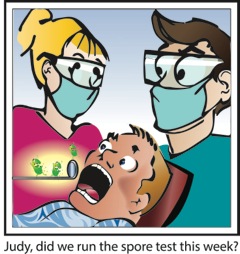
What Happens If Your Spore Test Fails?
Dental Sterilizer Failure Protocol (Step-by-Step Compliance Guide)
A failed spore test — also called a positive biological indicator — can be alarming for any dental office. However, a single failure does not automatically mean your sterilizer is unsafe or permanently out of service.
What matters most is how your team responds.
This step-by-step guide explains exactly what actions to take immediately, and how to protect your practice from compliance risk.
⚠️ Quick Answer: What Should You Do First After a Failed Spore Test?
If you only remember one thing, follow this sequence:
-
Remove the sterilizer from service
-
Review loading and cycle procedures
-
Retest using new biological indicators
-
Document all actions taken
-
Contact your monitoring provider if guidance is needed
This structured response demonstrates due diligence during inspections.
🚨 Step 1 — Remove the Sterilizer From Service when possible
When a biological monitoring result is positive, the associated sterilizer should be labeled “Out of Service.”
Why inspectors expect this:
-
A failed spore test indicates sterilization may not have been achieved.
-
Continued use without investigation increases compliance risk.
Clearly marking the unit prevents accidental use while retesting occurs.
🔬 Step 2 — Investigate Common Causes Before Assuming Equipment Failure
Many failed tests are related to workflow issues rather than mechanical problems.
Common causes include:
-
Overloaded sterilizer chamber
-
Improper packaging or wrapping
-
Incorrect cycle selection
-
Operator error
-
Expired or improperly stored indicators
Review recent processing habits before scheduling repairs.
📋 Step 3 — Retest the Sterilizer (Biological Monitoring Protocol)
Best practice is to perform additional biological monitoring cycles to confirm performance.
Typical retesting may include:
-
Multiple follow-up tests according to manufacturer guidance
-
Careful documentation of each cycle
Your biological monitoring provider can help interpret results and determine when the sterilizer may safely return to use.
🧼 Step 4 — Evaluate Instrument Processing Since the Last Negative Test
Offices should determine:
-
When the last successful spore test occurred
-
Which loads may be affected
-
Whether internal documentation or review is needed
This evaluation shows regulators that the office has a structured risk-management approach.
🛠 Step 5 — Inspect and Maintain the Sterilizer if Needed
If retesting does not resolve the issue, schedule service with a qualified technician.
Possible corrective actions:
-
Cleaning chambers and trays
-
Replacing gaskets or filters
-
Verifying cycle parameters
-
Checking water quality
Keep service reports as part of your compliance records.
🗂 Step 6 — Document Everything (What Inspectors Look For)
During inspections, regulators typically want to see evidence that the office:
-
Removed the sterilizer promptly
-
Retested appropriately
-
Investigated root causes
-
Implemented corrective actions
Recommended documentation includes:
-
Biological monitoring reports
-
Maintenance records
-
Internal notes or corrective action plans
Strong documentation demonstrates compliance even when problems occur.
❌ Common Mistakes Dental Offices Make After a Failed Spore Test
Avoid these frequent compliance errors:
-
Continuing to use the sterilizer while waiting for results
-
Performing only one retest without investigation
-
Failing to track affected instrument loads
-
Not keeping written documentation
Having a clear response protocol helps prevent these issues.
⭐ California Dental Offices: Why Response Protocol Matters Even More
California regulatory agencies often expect dental practices to demonstrate consistent sterilization monitoring and documented corrective action when failures occur.
Offices should ensure:
-
Biological monitoring is performed weekly, according to guidance
-
Results are reviewed promptly
-
Written records are maintained
A structured compliance process helps reduce risk during inspections.
✅ How to Prevent Future Spore Test Failures
Prevention starts with consistent training and monitoring.
Best practices include:
-
Routine biological monitoring
-
Proper loading and packaging techniques
-
Staff training on sterilization workflows
-
Using a reliable mail-in monitoring system
Many offices find that working with a compliance partner simplifies documentation and follow-up procedures.
Need Help Navigating a Failed Spore Test?
Receiving a positive biological monitoring result can feel overwhelming — but having the right support makes the process easier.
OSHA Review provides:
-
Biological monitoring programs
-
Clear reporting and documentation tools
-
Compliance guidance for dental practices
Contact our team if you need help interpreting results or strengthening your sterilization monitoring process.

Related Posts